Visit our large showroom: Black Market Antiques Antwerp.
Vintage, design, art and Oriental decoration. Interior decoration and home furnishing Antwerp.
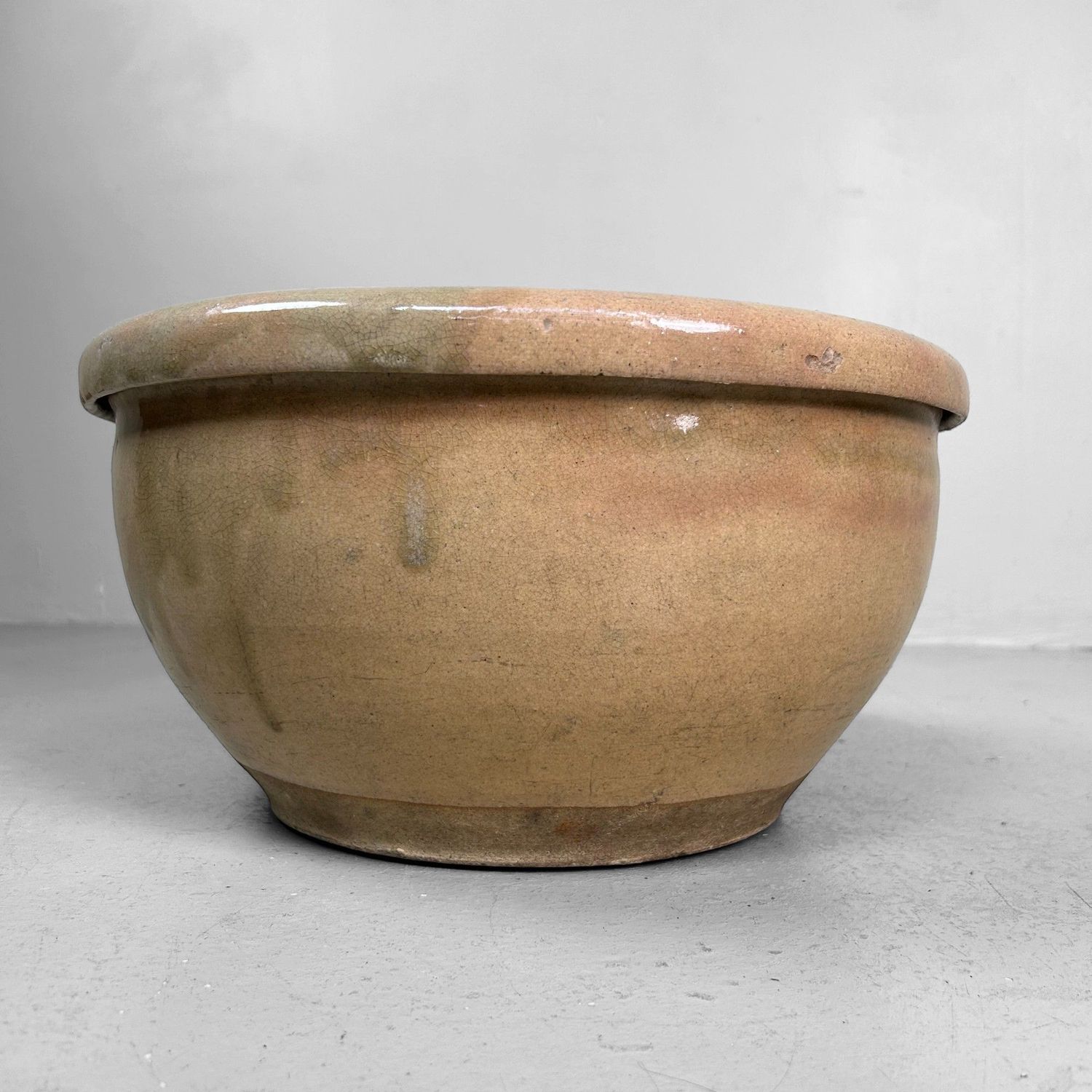
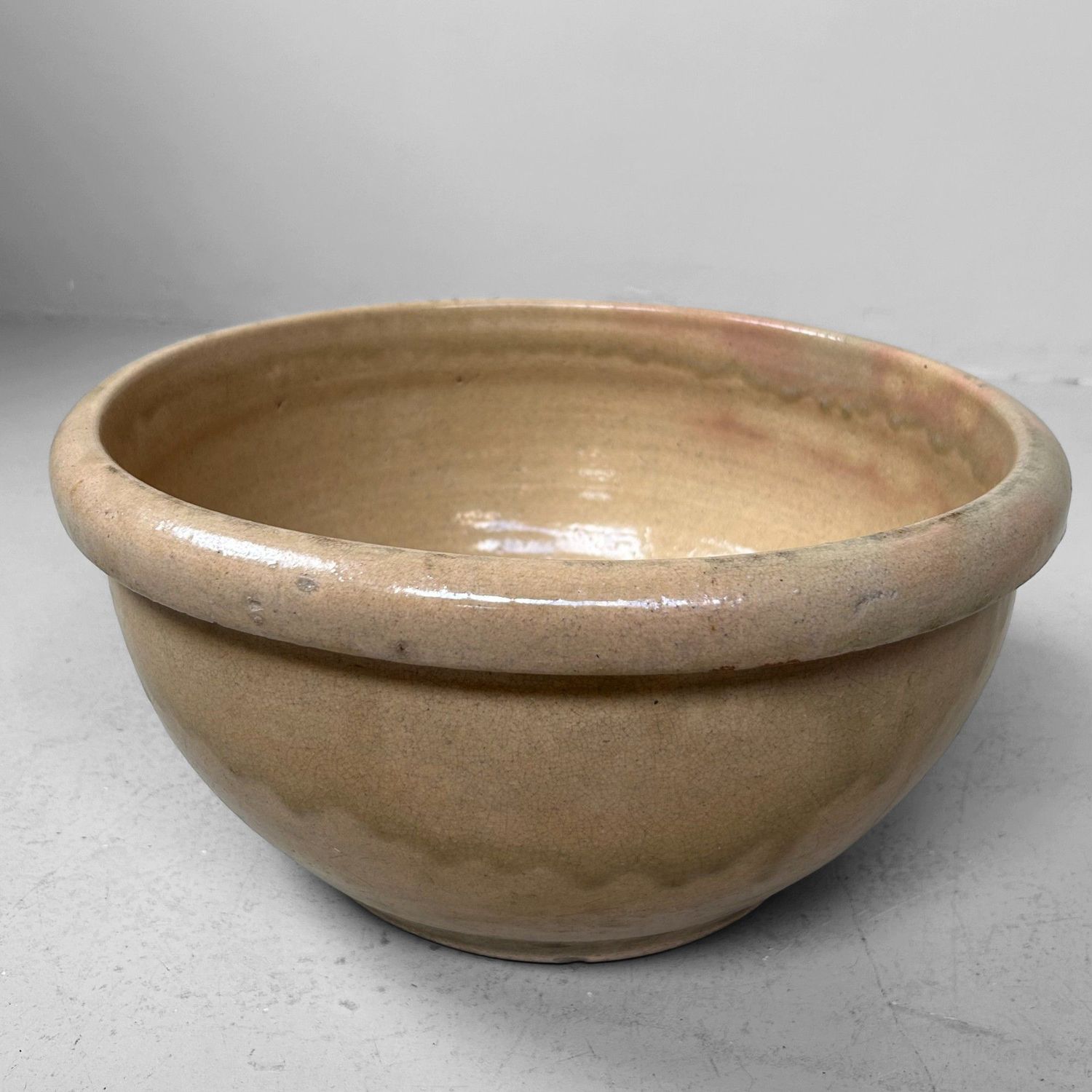
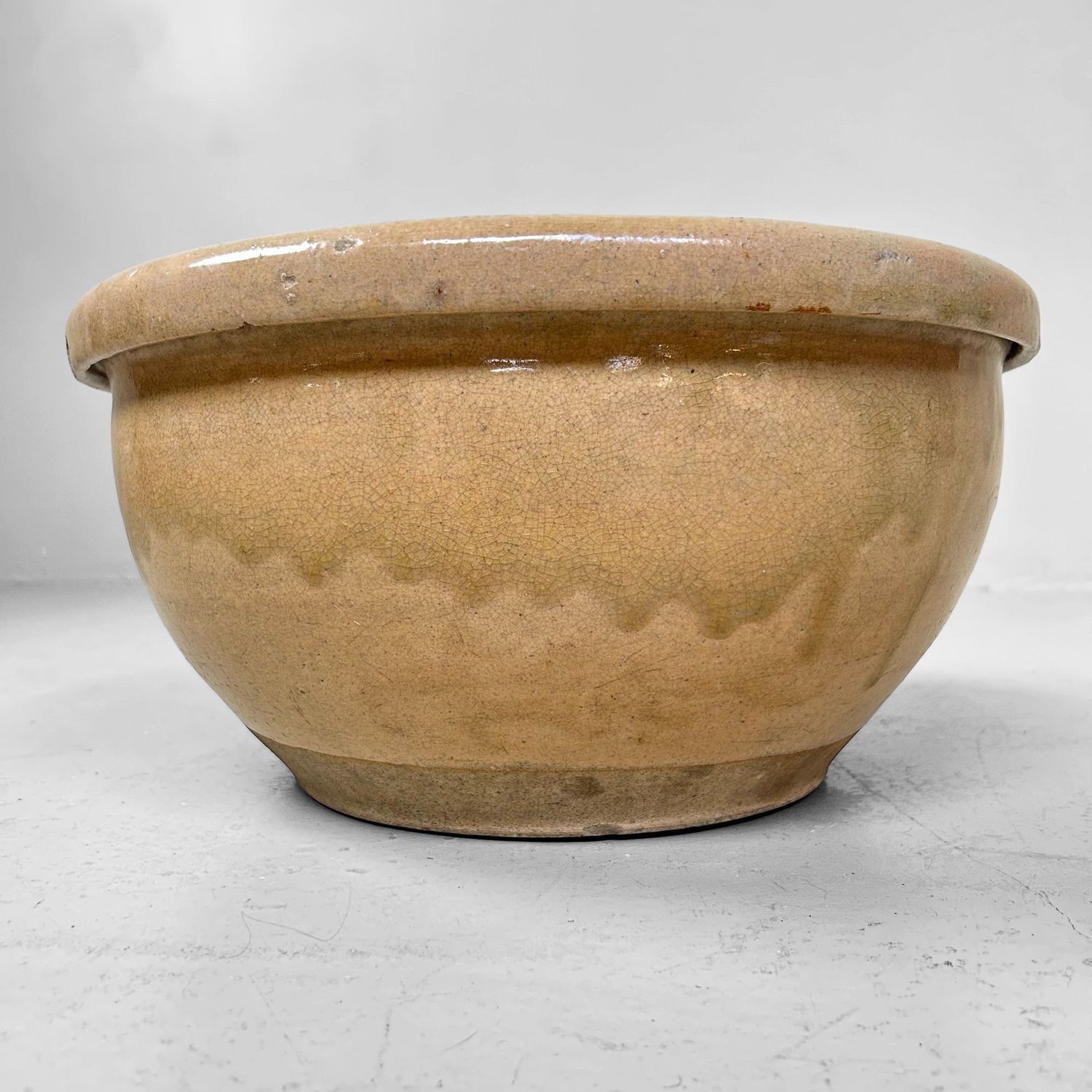
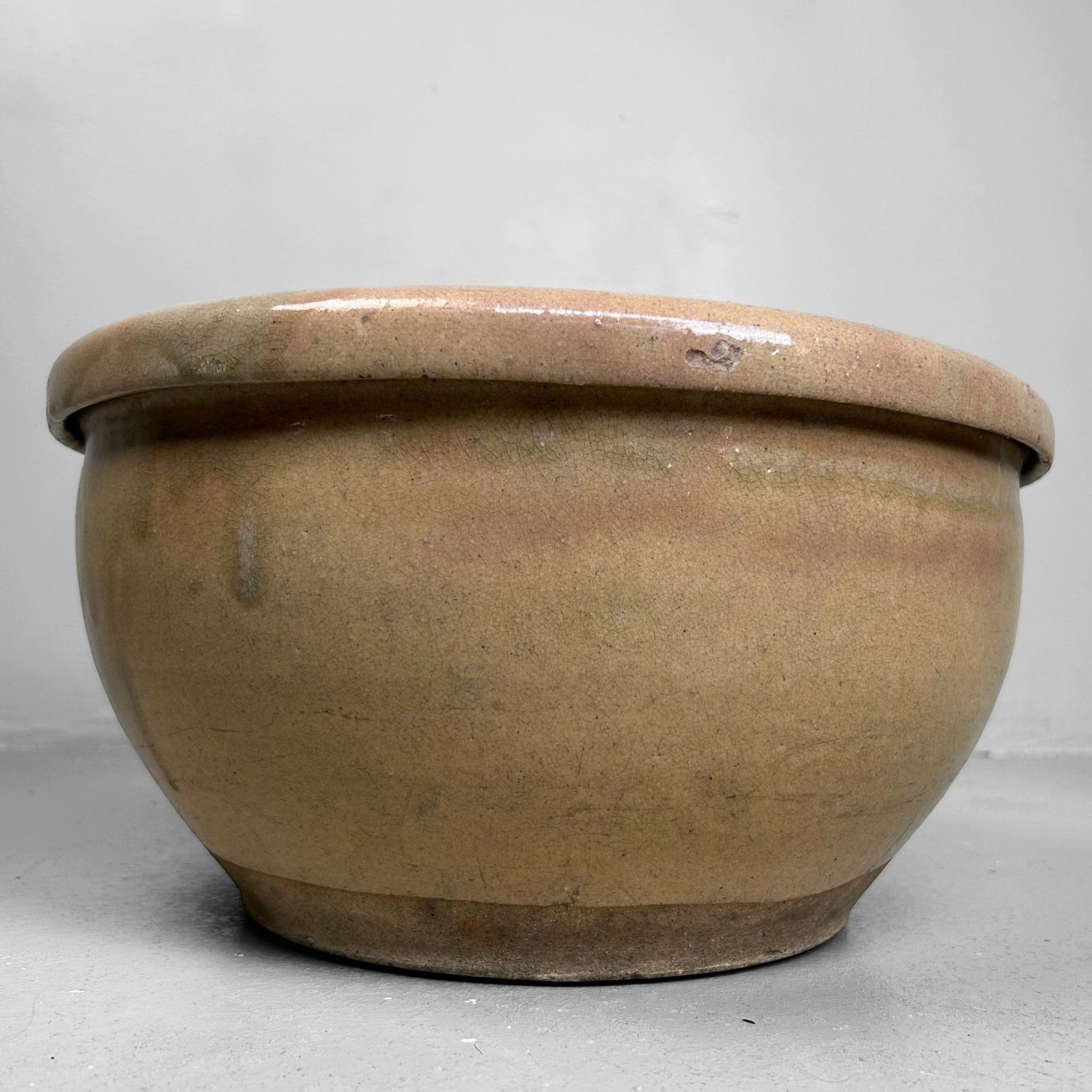
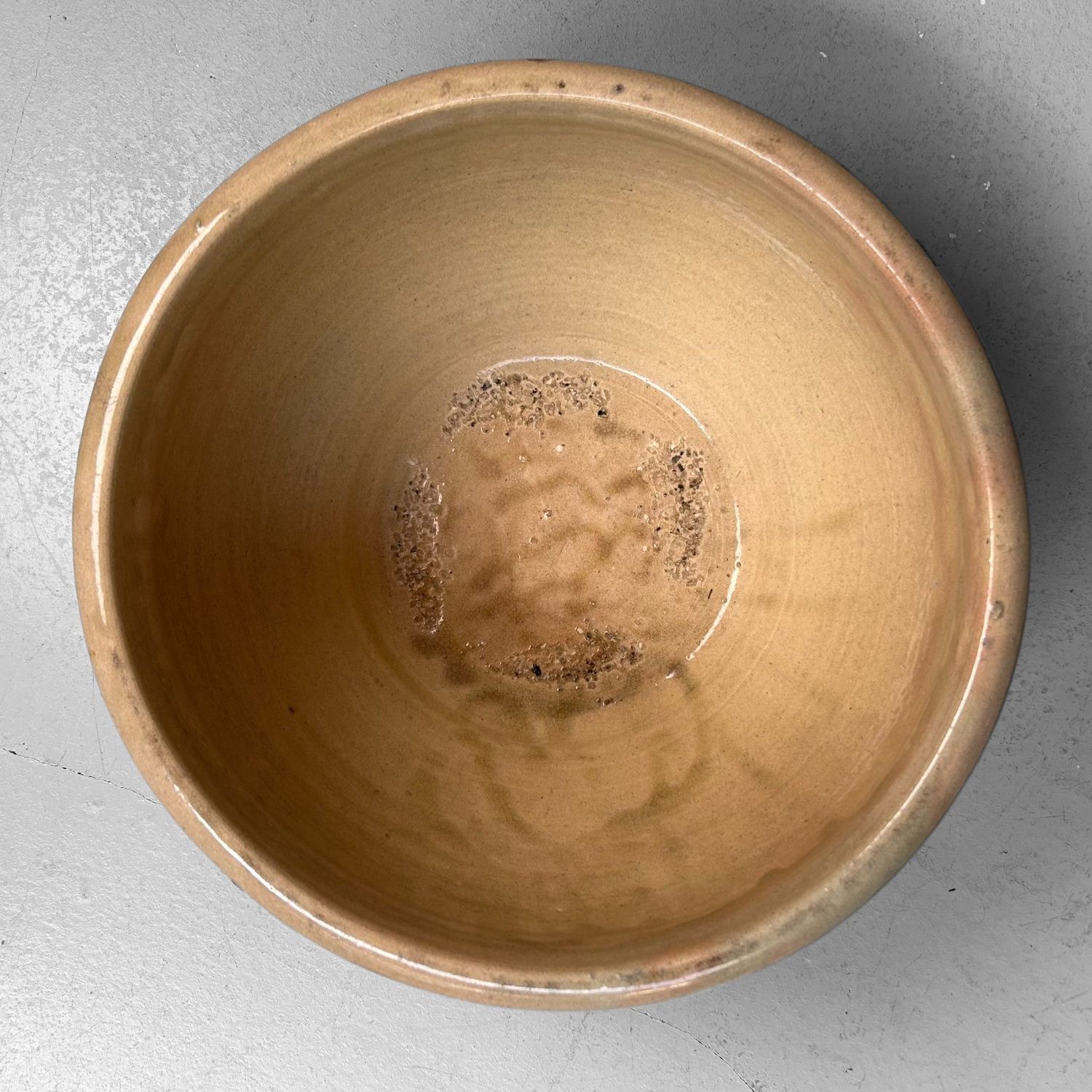
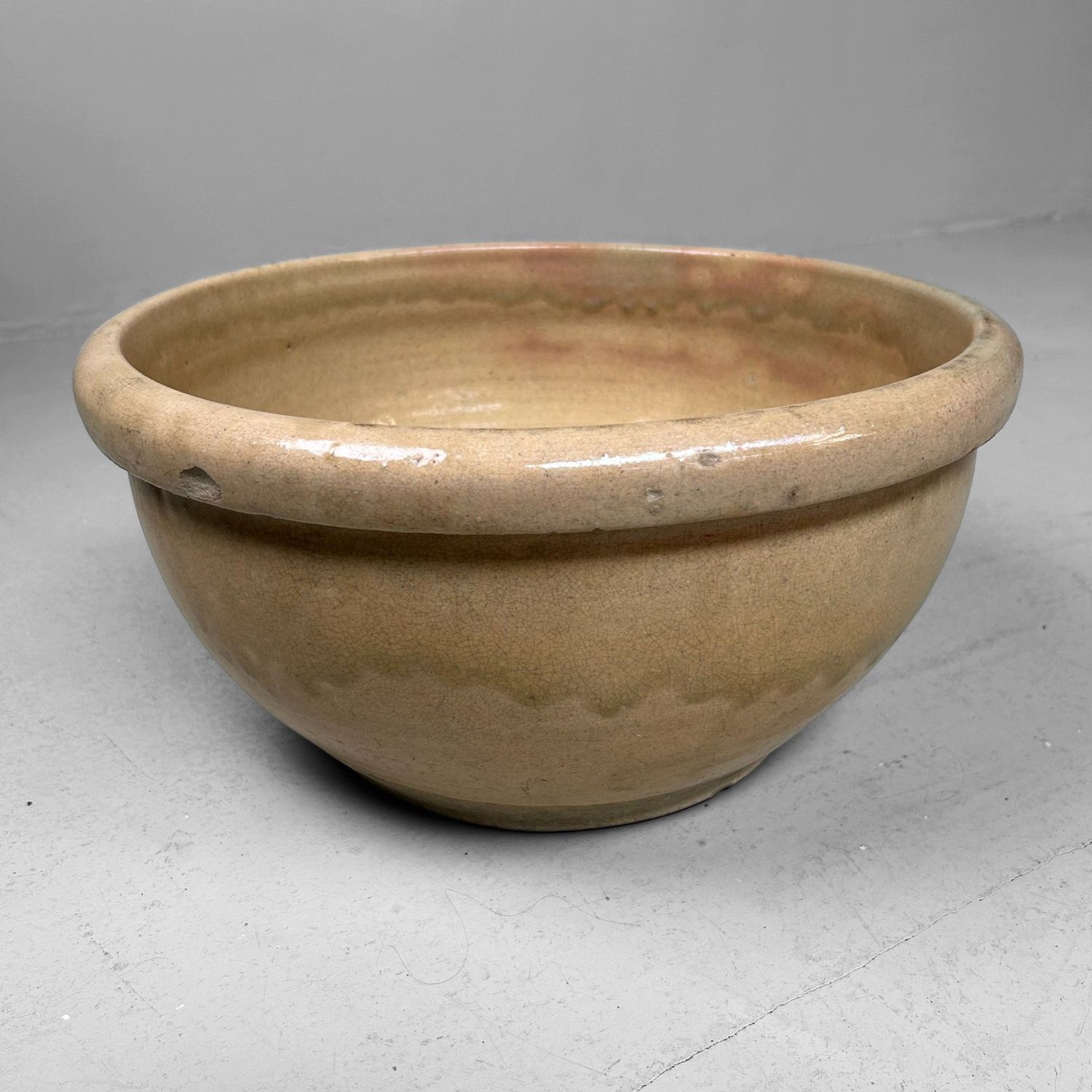
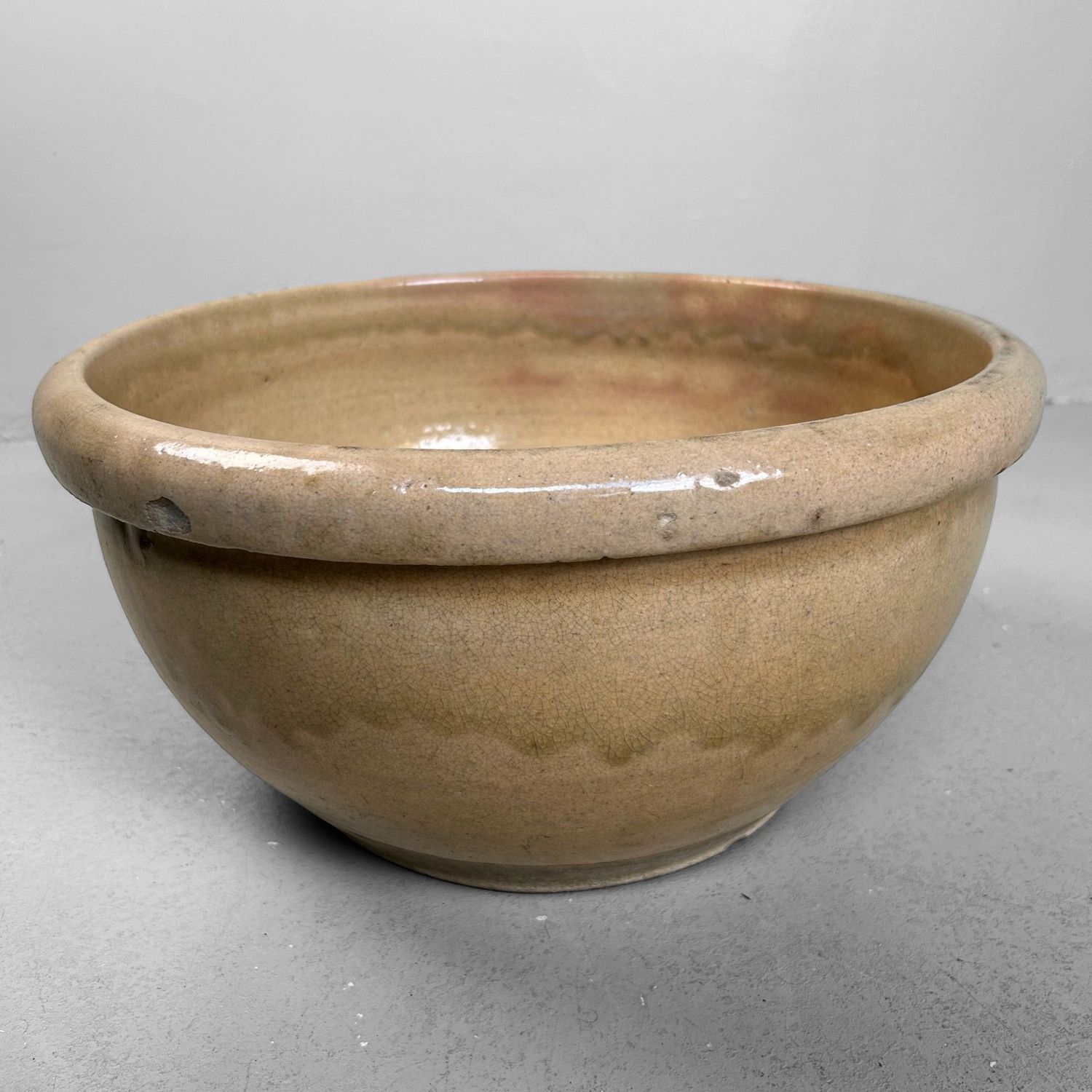
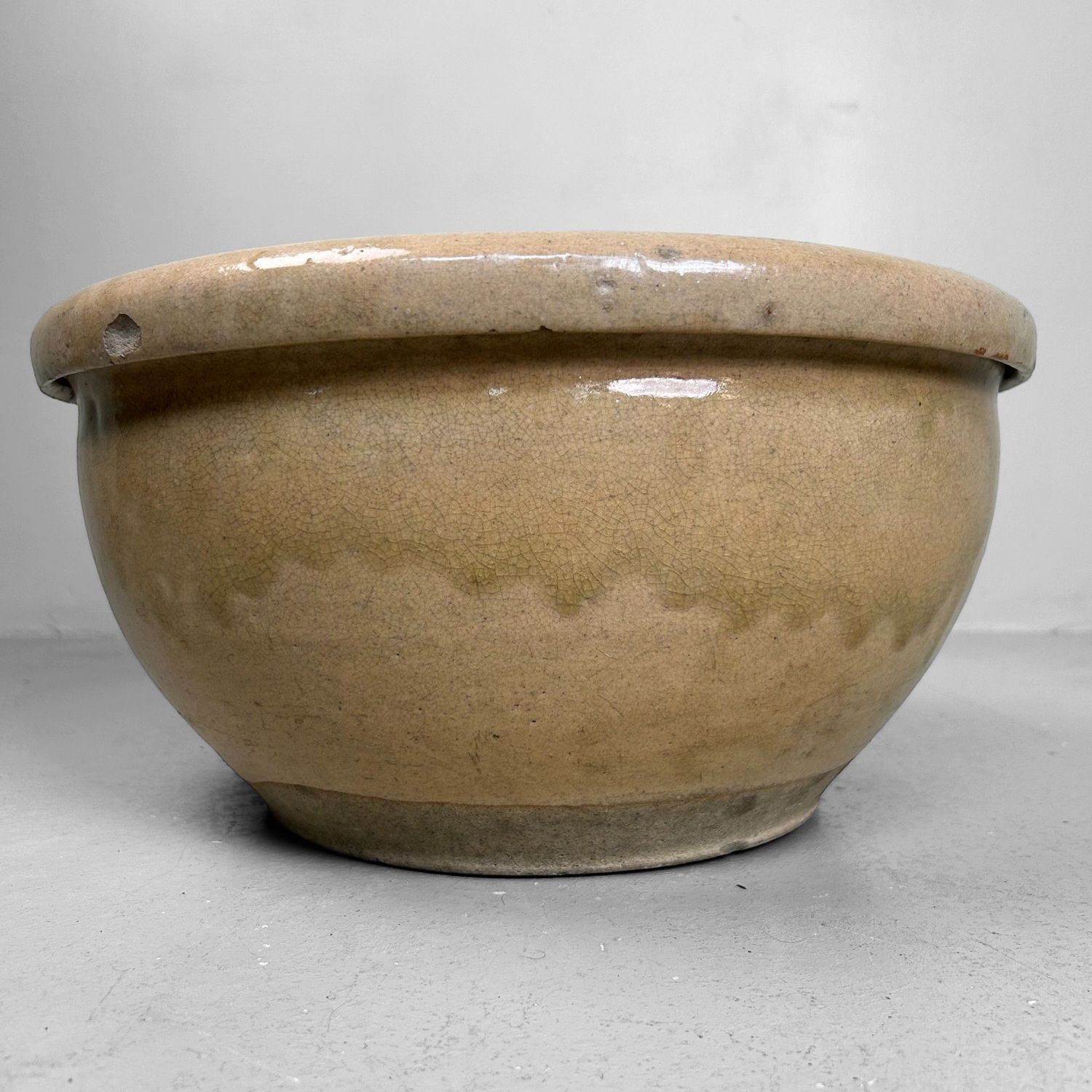
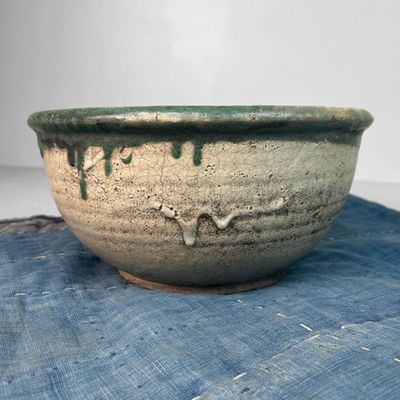
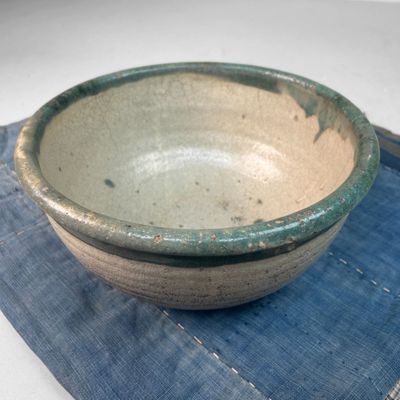
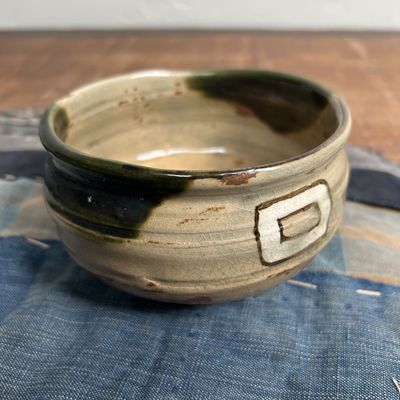
This robust earthenware bowl from Japan dates back to the Meiji period (1868–1912) and belongs to the mingei tradition, the Japanese folk art movement that emphasizes simplicity, functionality, and natural beauty. Originally used as a small kneading bowl, it bears subtle traces of practical use that enhance its authentic character.
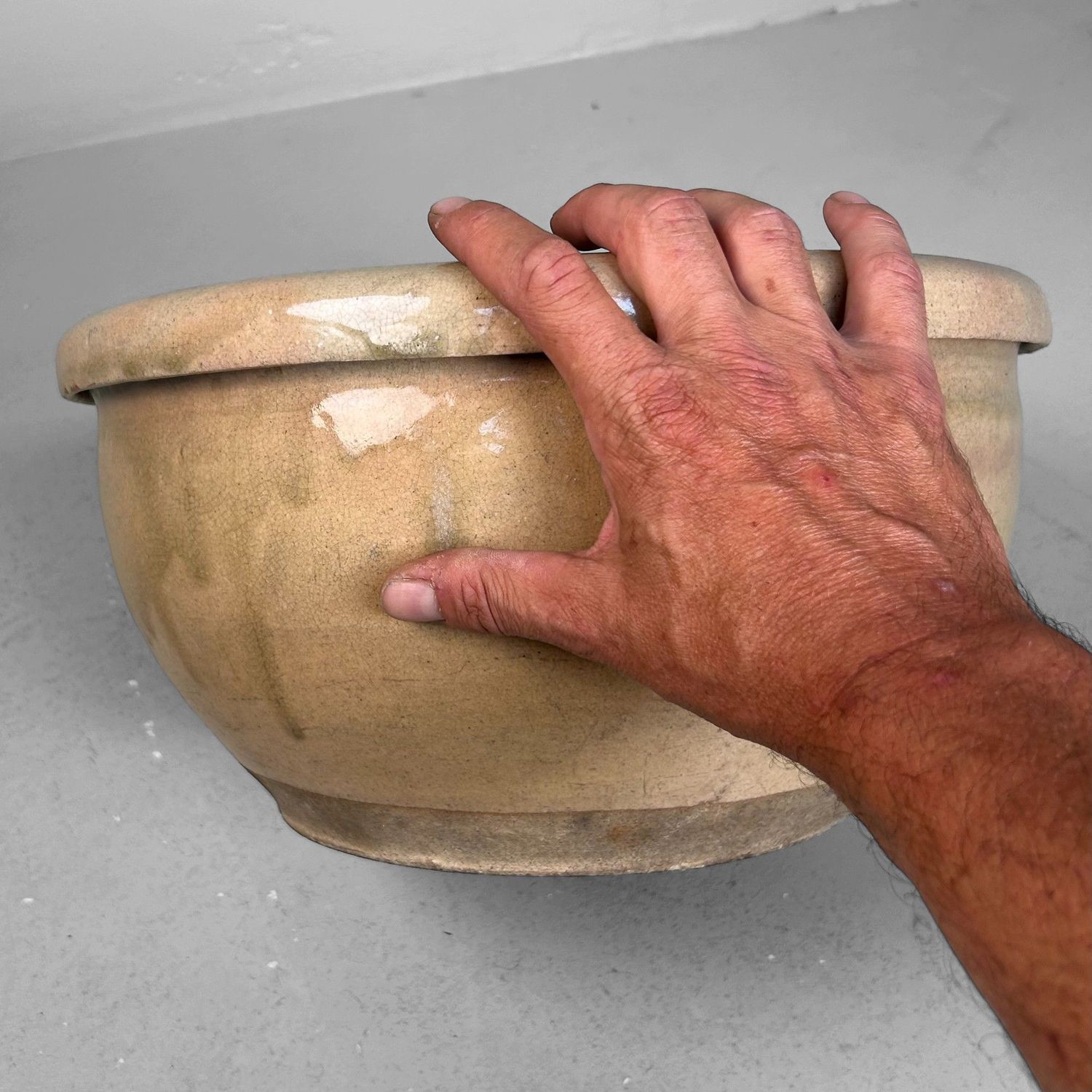
Dimensions: height 20 cm, diameter 40 cm. In good condition.
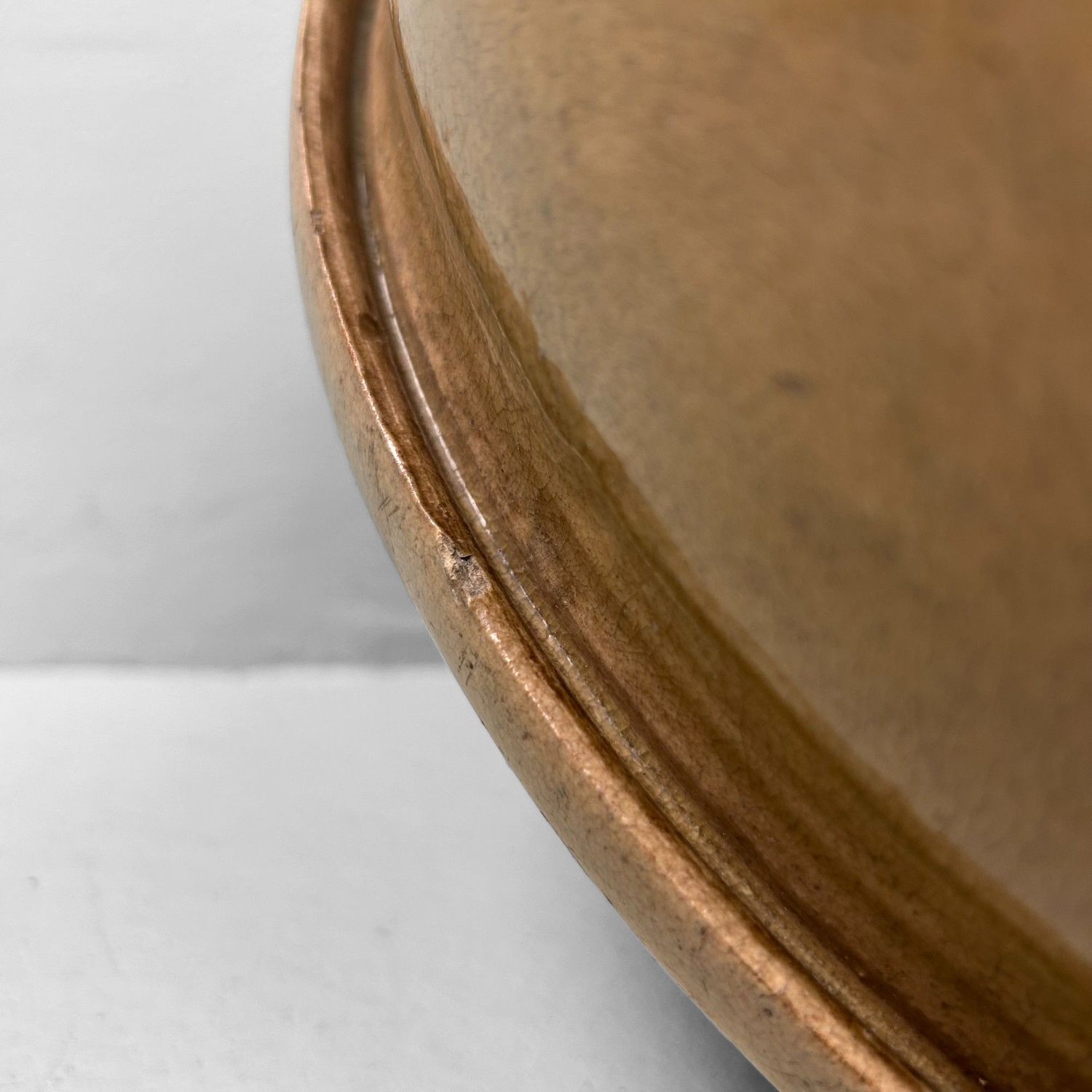
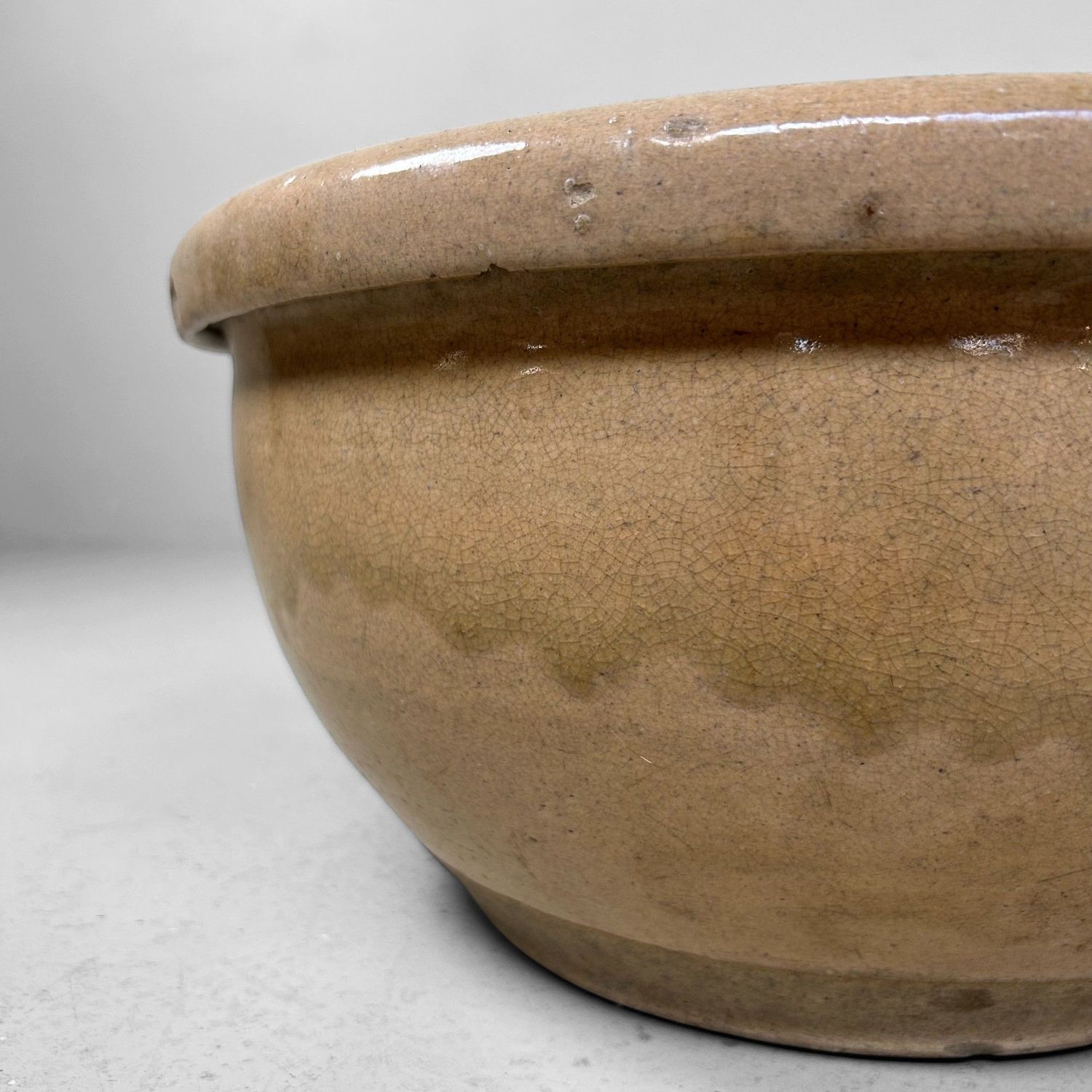
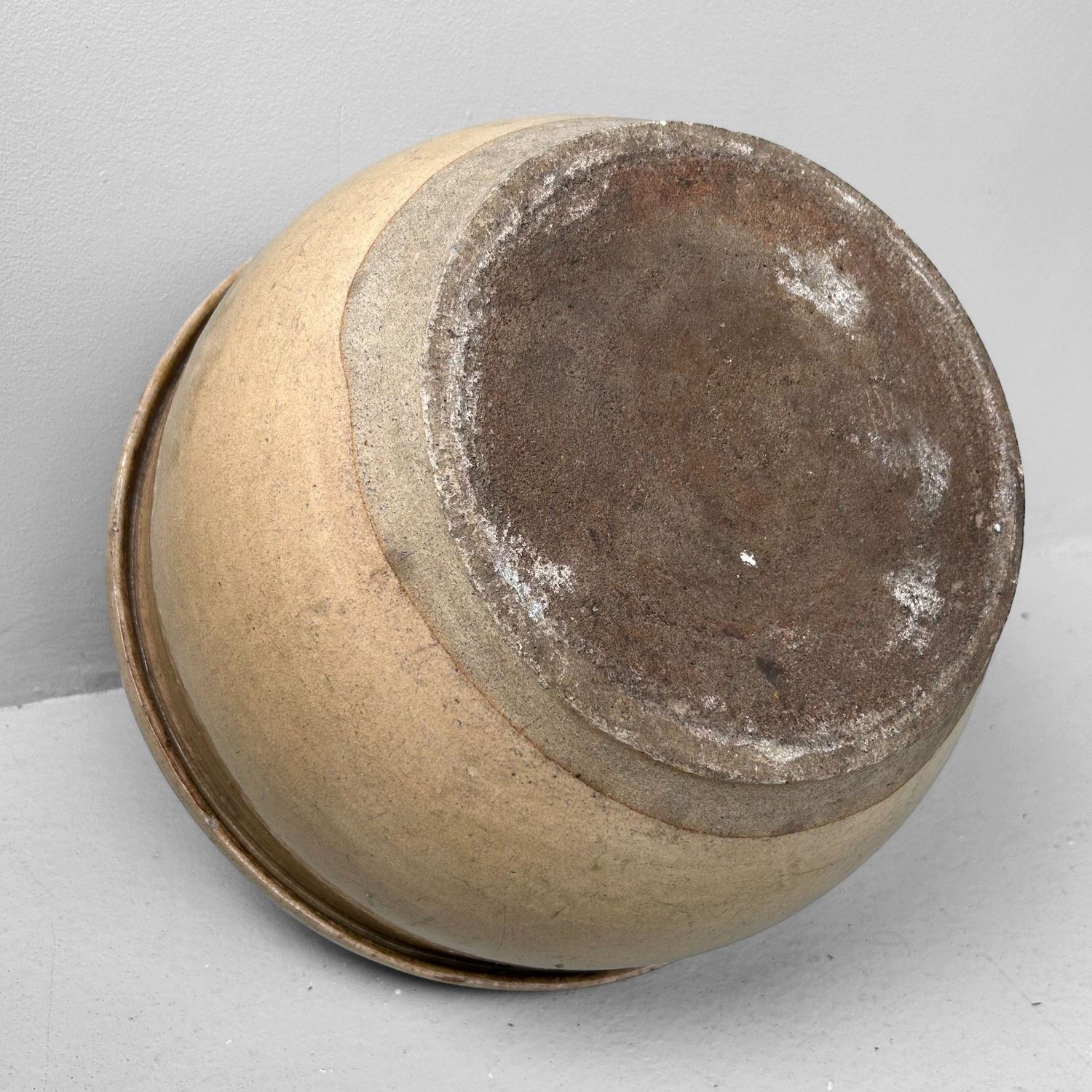
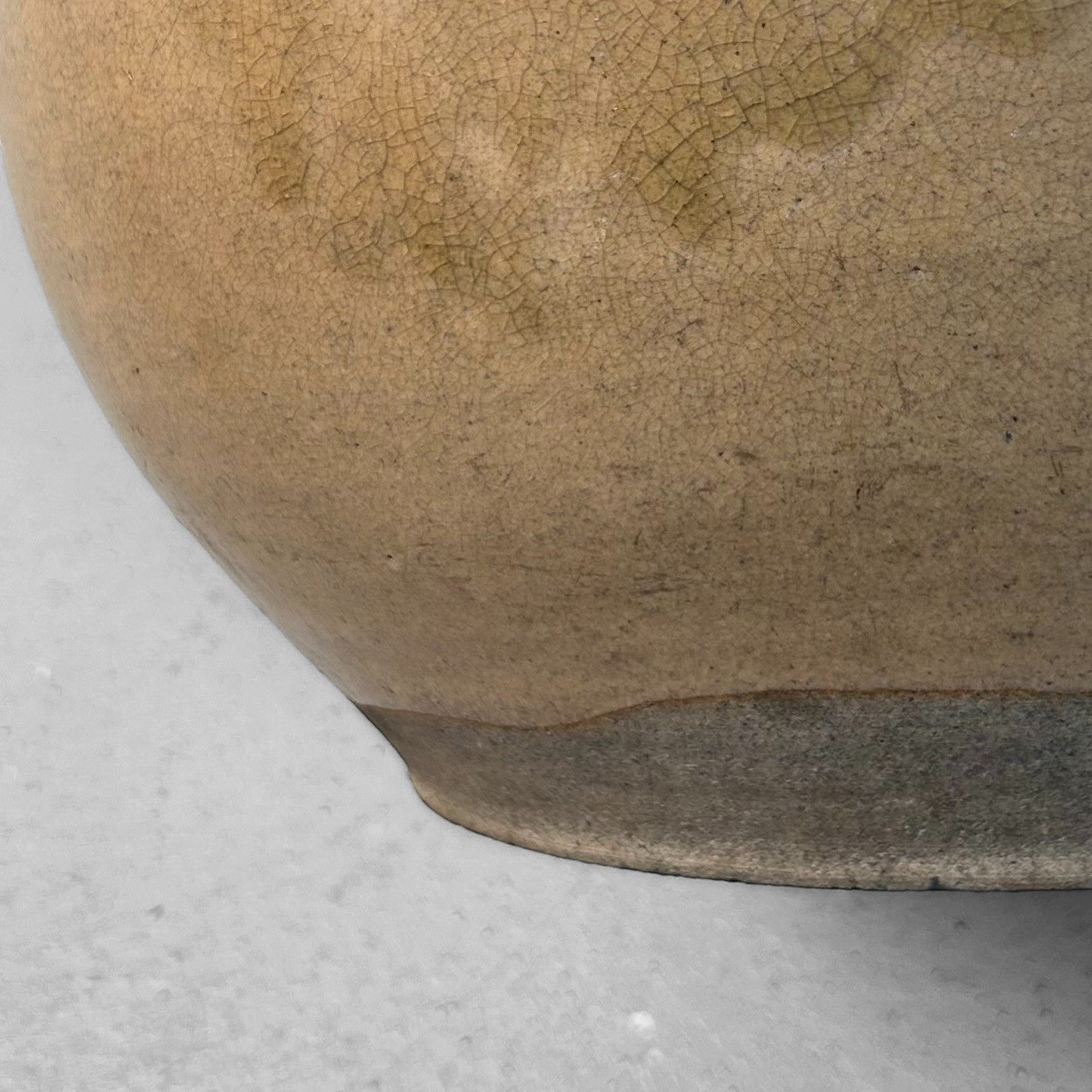
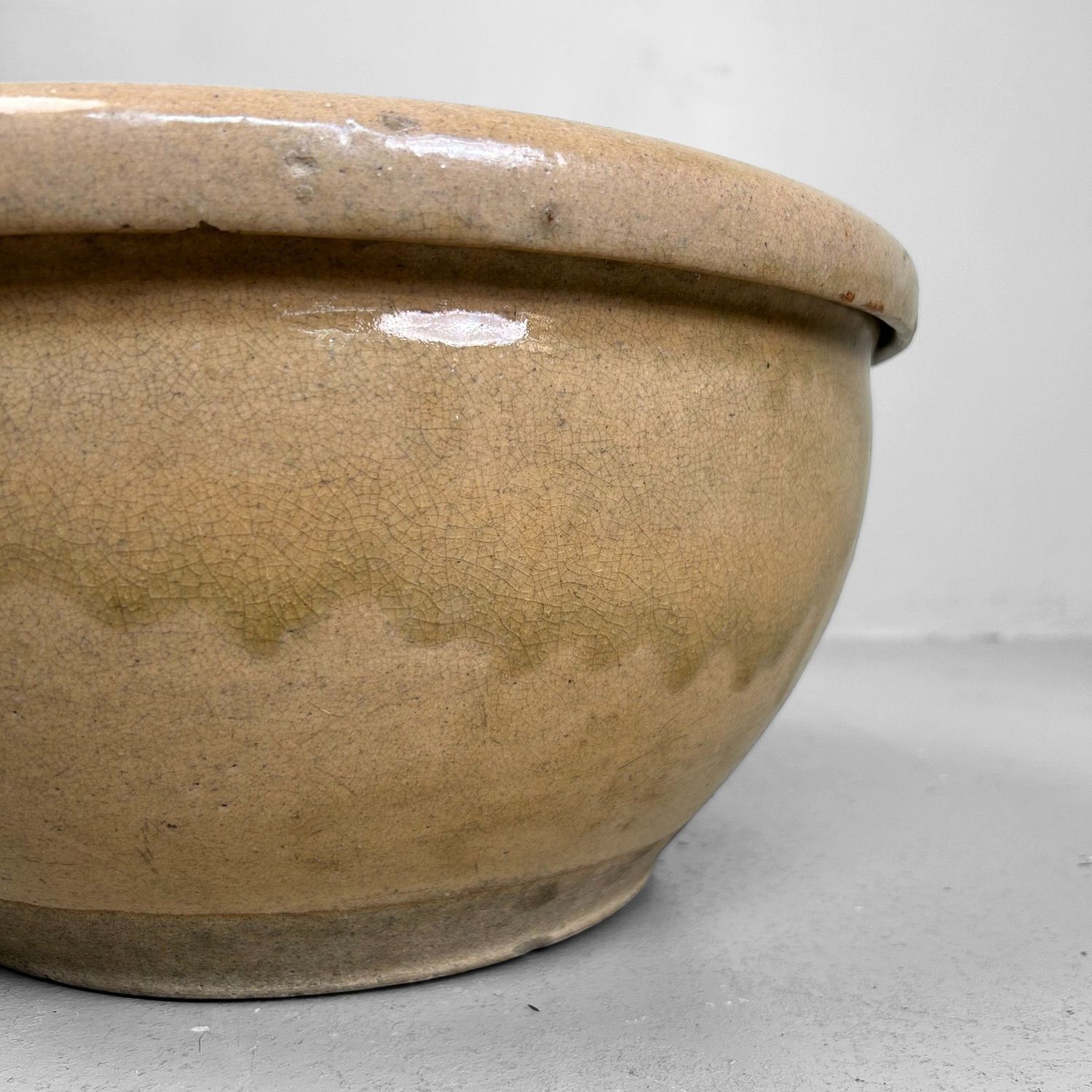
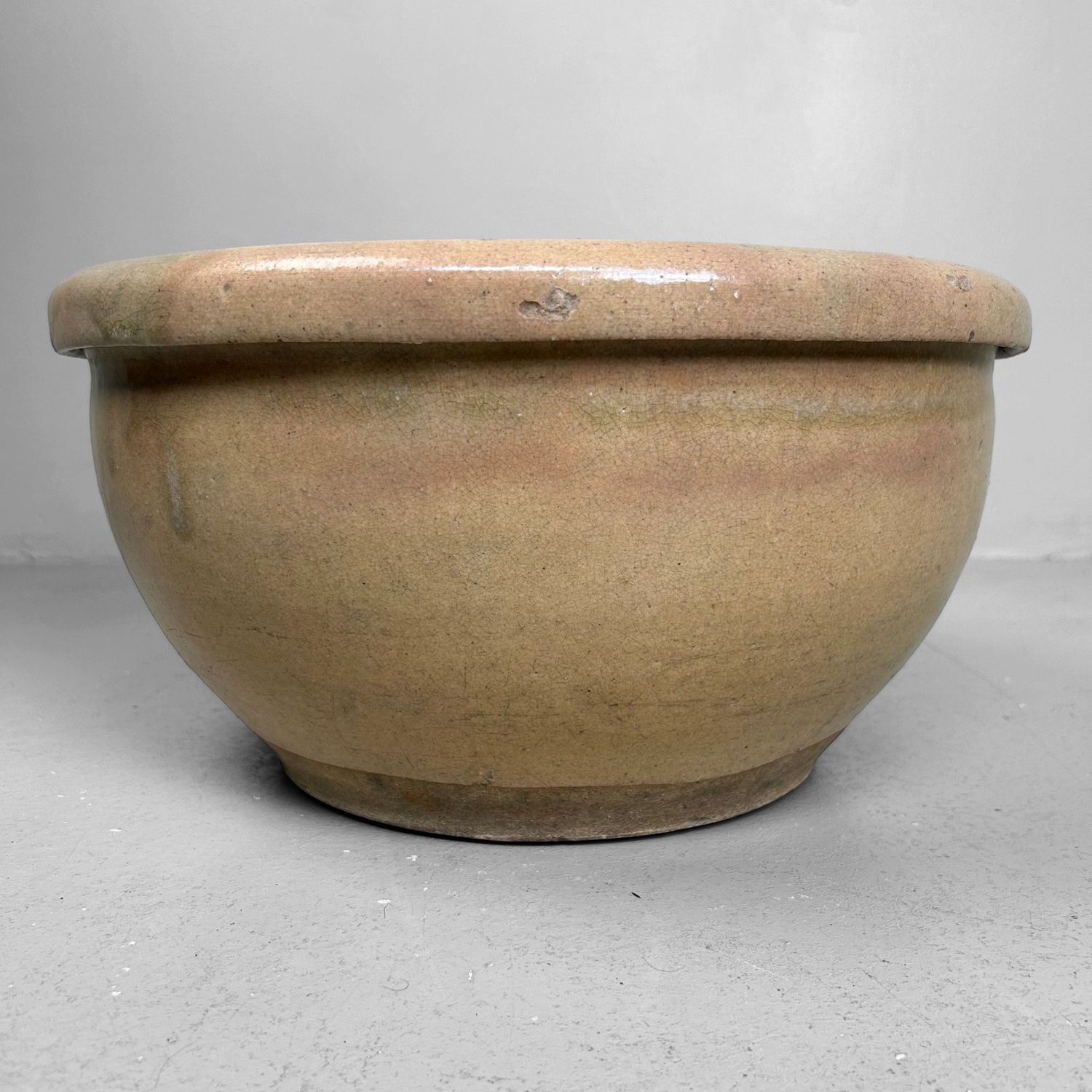
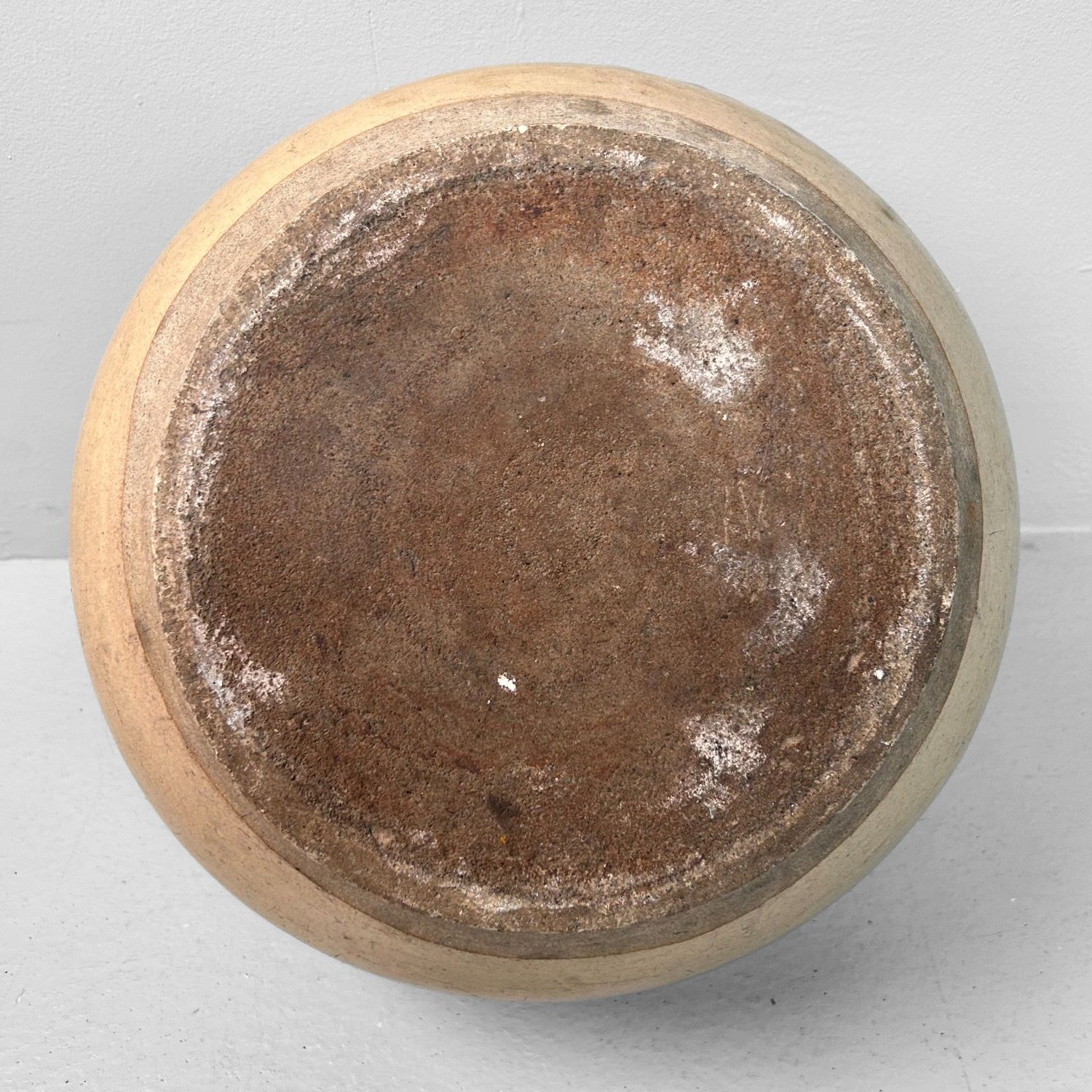
The form is round and full, with a wide, gently sloping wall and a solid, rounded rim that invites handling. The underside of the rim is left unglazed, creating a pleasing contrast with the smooth glaze on the interior and exterior. The bowl displays warm, natural earth tones, while the organic variation in color and the craquelure in the glaze add depth and character.
Today, it can shine not only as a decorative object in its own right, but also serve as a fruit bowl, nut dish, or plant stand.
A fine example of the Japanese mingei aesthetic, where simplicity and organic forms create a timeless sense of harmony.